
Premium Books
Showing 251–300 of 3787 results

All Around the Moon by Jules Verne
A few years ago the world was suddenly astounded by hearing of an experiment of a most novel and daring nature, altogether unprecedented in the annals of science. The BALTIMORE GUN CLUB, a society of artillerymen started in America during the great Civil War, had conceived the idea of nothing less than establishing direct communication with the Moon by means of a projectile! President Barbican, the originator of the enterprise, was strongly encouraged in its feasibility by the astronomers of Cambridge Observatory, and took upon himself to provide all the means necessary to secure its success.
All for Love or The World Well Lost a Tragedy by John Dryden
All for Love; Or, The World Well Lost: A Tragedy,John Dryden,Classics,prabhat books,low price books,prabhat books on kindle

All These Things Added by James Allen
Every human soul is in need. The expression of that need varies with individuals, but there is not one soul that does not feel it in some degree.
All Things Considered by G. K. Chesterton
Their chief vice is that so many of them are very serious; because I had no time to make them flippant. It is so easy to be solemn; it is so hard to be frivolous. Let any honest reader shut his eyes for a few moments, and approaching the secret tribunal of his soul, ask himself whether he would really rather be asked in the next two hours to write the front page of the Times, which is full of long leading articles, or the front page of Tit-Bits, which is full of short jokes. If the reader is the fine conscientious fellow I take him for, he will at once reply that he would rather on the spur of the moment write ten Times articles than one Tit-Bits joke.

All This and Heaven Too by Rachel Field
“Among the ill-assorted group of passengers waiting to leave the small steamer that had brought them across the Channel from Southampton to Le Havre, a woman stood erect and alone with her luggage piled about her. It was unusual in the year 1841 for a woman of her age and appearance to be travelling unaccompanied. Not that she showed striking beauty, but a certain spirited grace of carriage distinguished her from her fellow-travellers.” -an excerpt
All’s Well That Ends Well by William Shakespeare
All’s Well That Ends Well is a play by William Shakespeare. It is believed to have been written between 1604 and 1605, and was originally published in the First Folio in 1623

Allan and the Holy Flower by H. Rider Haggard
I do not suppose that anyone who knows the name of Allan Quatermain would be likely to associate it with flowers, and especially with orchids. Yet as it happens it was once my lot to take part in an orchid hunt of so remarkable a character that I think its details should not be lost. At least I will set them down, and if in the after days anyone cares to publish them, well—he is at liberty to do so.
Almayer’s Folly: A Story of an Eastern River by Joseph Conrad
First published in the year 1895, the present novel ‘Almayer’s Folly’ by Joseph Conrad is about a poor businessman who dreams of finding a hidden gold mine and becoming very wealthy. He is a white European, married to a native Malayan; they have one daughter named Nina. He fails to find the goldmine, and comes home saddened.
Alroy: The Prince of the Captivity by Benjamin Disraeli
“Being at Jerusalem in the year 1831, and visiting the traditionary tombs of the Kings of Israel, my thoughts recurred to a personage whose marvellous career had, even in boyhood, attracted my attention, as one fraught with the richest materials of poetic fiction. and I then commenced these pages that should commemorate the name of Alroy. In the twelfth century, when he arose, this was the political condition of the East” -Author’s Preface
Altruism by George Herbert Palmer
The book seeks to call attention to a section of ethics in regard to which the public mind greatly needs clarifying. Altruism and egoism, socialism and individualism, are in our time sentimentally arrayed against one another as independent and antagonistic agencies, each having its partisans. A careful examination will show, I think, that the one has meaning only when in company with its supposed rival. I have thought to make this clearest by tracing three stages through which the altruistic impulse passes in every-day life, exhibiting their varying degrees of dignity and the helpful presence in all of them of egoistic balance. If through my notion of a conjunct self I have made this curious partnership plain I shall count it no mean contribution to our generous, sacrificial, self-assertive, and perplexed time.
Amelia by Henry Fielding
Fielding’s third great novel has been the subject of much more discordant judgments than either of its forerunners. If we take the period since its appearance as covering four generations, we find the greatest authority in the earliest, Johnson, speaking of it with something more nearly approaching to enthusiasm than he allowed himself in reference to any other work of an author, to whom he was on the whole so unjust. The greatest man of letters of the next generation, Scott (whose attitude to Fielding was rather undecided, and seems to speak a mixture of intellectual admiration and moral dislike, or at least failure in sympathy), pronounces it “on the whole unpleasing,” and regards it chiefly as a sequel to Tom Jones, showing what is to be expected of a libertine and thoughtless husband. But he too is enthusiastic over the heroine. Thackeray (whom in this special connection at any rate it is scarcely too much to call the greatest man of the third generation) overflows with predilection for it, but chiefly, as it would seem, because of his affection for Amelia herself, in which he practically agrees with Scott and Johnson. It would be invidious, and is noways needful, to single out any critic of our own time to place beside these great men. But it cannot be denied that the book, now as always, has incurred a considerable amount of hinted fault and hesitated dislike. Even Mr. Dobson notes some things in it as “unsatisfactory;” Mr. Gosse, with evident consciousness of temerity, ventures to ask whether it is not “a little dull.” The very absence of episodes (on the ground that Miss Matthews’s story is too closely connected with the main action to be fairly called an episode) and of introductory dissertations has been brought against it, as the presence of these things was brought against its forerunners.

Amenities of Literature by Isaac Disraeli
First published in the year 1840, the present book ‘Amenities of Literature’ by Isaac Disraeli is a longish study of the English European literature. This book can well serve as a well compiled book on the English literature and literary ages.
America and the World War by Theodore Roosevelt
In his message President Wilson has expressed his laudable desire that this country, naturally through its President, may act as mediator to bring peace among the great European powers. With this end in view he, in his message, deprecates our taking any efficient steps to prepare means for our own defense, lest such action might give a wrong impression to the great warring powers.’ -an excerpt
An important book by Theodore Roosevelt on America’s role in the World War.
American Fairy Tales by L. Frank Baum
No one intended to leave Martha alone that afternoon, but it happened that everyone was called away, for one reason or another. Mrs. McFarland was attending the weekly card party held by the Women’s Anti-Gambling League. Sister Nell’s young man had called quite unexpectedly to take her for a long drive. Papa was at the office, as usual. It was Mary Ann’s day out. As for Emeline, she certainly should have stayed in the house and looked after the little girl; but Emeline had a restless nature.

American Independence and the French Revolution (1760-1801) by S. E. Winbolt
This series of English History Source Books is intended for use with any ordinary textbook of English History. Experience has conclusively shown that such apparatus is a valuable—nay, an indispensable—adjunct to the history lesson. It is capable of two main uses: either by way of lively illustration at the close of a lesson, or by way of inference-drawing, before the textbook is read, at the beginning of the lesson.
American Indian Fairy Tales by W. T. Larned
This scarce antiquarian book is a facsimile reprint of the original. Because we believe this work is culturally important, we have made it available as part of our commitment for protecting, preserving, and promoting the world’s literature in affordable, high quality, modern editions that are true to the original work.
American Masters of Painting by Charles H. Caffin
His father, a retired New York grocer, would have had him enter business, and even opened a small store for him in Newark, N.J., whither the family had moved from Newburg. But the son’s mind was set on art. Like Durand, Kensett, and{4} Casilear, he was apprenticed for a short time to an engraver, and subsequently studied painting for a little while with Regis Gignoux, a pupil of Delaroche. For the rest he was self-taught. His contemporary, Frederick E. Church, younger than himself by a year, was seeking instruction from Thomas Cole, the founder of the “Hudson River School,” whose grand topographical landscapes the pupil was to follow in his studies of the Andes, of Niagara, and of other impressive regions.

American Notes by Charles Dickens
First published in the year 1842, ‘American Notes’ is a travelogue written by the celebrated realist English novelist Charles Dickens.

Amitabha, A Story of Buddhist Theology by Paul Carus
This is a short story set in the first century CE during the height of Buddhism in India. Carus uses the story as a frame to discuss Buddhist concepts of God, non-violence and religious tolerance.
Among The An-Ko-Me-Nums by Thomas Crosby
I have been requested to write a few words of introduction to this deeply interesting volume, and I gladly comply, although the task may seem to be quite superfluous. Thomas Crosby, or anything he may write, needs no introduction, at least in Methodist circles. For a generation his name has been a household word, and from time to time brief accounts of his heroic labors have found their way through the press into many homes. But these accounts were fragmentary and incomplete. -Preface
Among the Head-Hunters of Formosa by Janet B. Montgomery McGovern
Among the Head-hunters of Formosa contains the substance of observations made during a two-years’ stay in Formosa—from September 1916 to September 1918. The book is written for the general reader, rather than for the specialist in anthropology or ethnology. Hence many details—especially those concerning minor differences in manners and customs among the various aboriginal tribes—have been omitted; for these, while perhaps of interest to the specialist, would prove wearying to the layman.

Among the Pond People by Clara Dillingham Pierson
A collection of short stories for children written by famous writer Clara Dillingham Pierson, ‘Among the Pond People’ consists eighteen stories that are imagination of everyday life of the creatures of a pond.
Among the River Pirates by Hugh Lloyd
Skippy was so frightened that he did nothing for a moment but sit and stare. Then suddenly he realized the terrible thing before his eyes, and he pulled the boat up alongside of the barge, trembling from head to foot.
The dog leaped out of his arms the moment he got on deck and refused to run with him to the shanty. But Skippy had neither the time nor the nerves to think of anything but the battered Beasell in the boat floating beside the barge.’ -an excerpt
This murder mystery by Hugh Lloyd has a reader binding narrative, and is full of highs and lows at different points, which keeps the readers curious and engaged.
Amores by D H Lawrence
Amores is a beautiful collection of poems by D.H. Lawrence, one of the most respected and most loved writers of all-time. We are delighted to publish this classic book as part of our extensive Classic Library collection.
Amusements in Mathematics by Henry Ernest Dudeney
One of the largest puzzle collections — 430 brainteasers based on algebra, arithmetic, permutations, probability, plane figure dissection, properties of numbers, etc. Intriguing, witty, paradoxical productions of one of the world’s foremost creators of puzzles. More than 450 illustration with Solution

An Account of the Growth of Deism in England by William Stephens
First published in the year 1696, the present book ‘An Account of the Growth of Deism in England’ by the famous anthropologist, historian William Stephens gives a concise religious history of the spread of deism in England.
An Address to a Wealthy Libertine by James Parkerson
Believe me, Sir; I do these lines impart
With every pang that can corrode the heart;
Bring to your mind a dismal scene late past,
And let that guilty Amour be your last.
Think of my friend that was of late so gay,
By your vile arts dishonour’d and away;
From every joy that animates this life,
The tender mother and the happy wife.
A husband’s frowns, a father’s burning tears,
For Stella’s folly much increase their cares.
An Advanced English Grammar with Exercises by Farley and Kittredge
This grammar is intended for students who have already received instruction in the rudiments. Still, every such textbook must begin at the beginning. gives a succinct treatment of the Parts of Speech in the Sentence and of their substitutes, the Phrase and the Clause, concluding with a Summary of Definitions. Thus it clears the way for what follows, and may be utilized as a review, if the student needs to refresh his memory.
—From this Book
An Agricultural by SIR ALBERT HOWARD, C.l.E., M.A.
“Since the Industrial Revolution the processes of growth have been speeded up to produce the food and raw materials needed by the population and the factory. Nothing effective has been done to replace the loss of fertility involved in this vast increase in crop and animal production. The consequences have been disastrous. Agriculture has become unbalanced: the land is in revolt: diseases of all kinds are on the increase: in many parts of the world Nature is removing the worn-out soil by means of erosion.” -Preface

An Ambitious Man by Wilcox, Ella Wheeler
When Miss Lawrence’s mother, a nervous invalid, was informed of her daughter’s engagement, she burst into tears, as over a lamb offered on the altar of sacrifice; and Judge Lawrence pressed a kiss on the lobe of Mabel’s left ear which she offered him, and told her she had won a prize in the market. But as he sat alone over his cigar that night, he sighed heavily, and said to himself, “Poor fellow, I wish Mabel were not so much like her mother.”—from book
An Antarctic Mystery by Jules Verne
No doubt the following narrative will be received with entire incredulity, but I think it well that the public should be put in possession of the facts narrated in “An Antarctic Mystery.” The public is free to believe them or not, at its good pleasure.
An Apache Princess: A Tale of the Indian Frontier by Charles King
Under the willows at the edge of the pool a young girl sat daydreaming, though the day was nearly done. All in the valley was wrapped in shadow, though the cliffs and turrets across the stream were resplendent in a radiance of slanting sunshine. Not a cloud tempered the fierce glare of the arching heavens or softened the sharp outline of neighboring peak or distant mountain chain. Not a whisper of breeze stirred the drooping foliage along the sandy shores or ruffled the liquid mirror surface. Not a sound, save drowsy hum of beetle or soft murmur of rippling waters, among the pebbly shallows below, broke the vast silence of the scene. The snow cap, gleaming at the northern horizon, lay one hundred miles away and looked but an easy one-day march. The black upheavals of the Matitzal, barring the southward valley, stood sullen and frowning along the Verde, jealous of the westward range that threw their rugged gorges into early shade.

An Apology for the Life of Mrs. Shamela Andrews by Henry Fielding
The present novel by Henry Fielding, ‘An Apology for the Life of Mrs. Shamela Andrews’ is a work of satire. It is a direct attack on the then-popular novel Pamela (1740) by Fielding’s contemporary and rival Samuel Richardson and is composed, like Pamela, in epistolary form.
An Autobiography of Buffalo Bill by Buffalo Bill
William Frederick “Buffalo Bill” Cody was one of the most colorful figures of the American Old West. He received the nickname “Buffalo Bill” after the American Civil War, when he had a contract to supply Kansas Pacific Railroad workers with buffalo (American bison) meat. Cody killed 4,282 buffalo in eighteen months in 1867 and 1868. As a frontier scout, Cody respected Native Americans and supported their civil rights, as well as supporting the rights of women. He was also known as a conservationist who advocated the establishment of a hunting season.
An Autumn Sowing by E.F. Benson
This is a reproduction of a book published before 1923. This book may have occasional imperfections such as missing or blurred pages, poor pictures, errant marks, etc.
An Enemy of the People by Henrik Ibsen
An Enemy of the People is an 1882 play by Norwegian playwright Henrik Ibsen.
An English Grammar by W. M. Baskervill and J. W. Sewell
It has been our aim to make a grammar of as wide a scope as is consistent with the proper definition of the word. Therefore, in addition to recording and classifying the facts of language, we have endeavored to attain two other objects,—to cultivate mental skill and power, and to induce the student to prosecute further studies in this field. It is not supposable that in so delicate and difficult an undertaking there should be an entire freedom from errors and oversights. We shall gratefully accept any assistance in helping to correct mistakes.

An Enquiry Concerning Human Understanding by David Hume
Written by famous writer David Hume, the present book titled ‘An Enquiry Concerning Human Understanding’ was first published in the year 1748. This was appreeciated by famous socio-economic thinker Immanuel Kant and has been regarded as a classic in modern philosophical literature.

An Entertaining History of Tom Thumb by Unknown
Great Stories and poems for children is a collection of most delightful childrens stories.
An Essay on Criticism by Alexander Pope
This eminent English poet was born in London, May 21, 1688. His parents were Roman Catholics, and to this faith the poet adhered, thus debarring himself from public office and employment. His father, a linen merchant, having saved a moderate competency, withdrew from business, and settled on a small estate he had purchased in Windsor Forest. He died at Chiswick, in 1717. His son shortly afterwards took a long lease of a house and five acres of land at Twickenham, on the banks of the Thames, whither he retired with his widowed mother, to whom he was tenderly attached and where he resided till death, cultivating his little domain with exquisite taste and skill, and embellishing it with a grotto, temple, wilderness, and other adjuncts poetical and picturesque. In this famous villa Pope was visited by the most celebrated wits, statesmen and beauties of the day, himself being the most popular and successful poet of his age. His early years were spent at Binfield, within the range of the Royal Forest. He received some education at little Catholic schools, but was his own instructor after his twelfth year. He never was a profound or accurate scholar, but he read Latin poets with ease and delight, and acquired some Greek, French, and Italian. He was a poet almost from infancy, he “lisped in numbers,” and when a mere youth surpassed all his contemporaries in metrical harmony and correctness. His pastorals and some translations appeared in 1709, but were written three or four years earlier. These were followed by the Essay on Criticism, 1711; Rape of the Lock (when completed, the most graceful, airy, and imaginative of his works), 1712-1714; Windsor Forest, 1713; Temple of Fame, 1715. In a collection of his works printed in 1717 he included the Epistle of Eloisa and Elegy on an Unfortunate Lady, two poems inimitable for pathetic beauty and finished melodious versification.
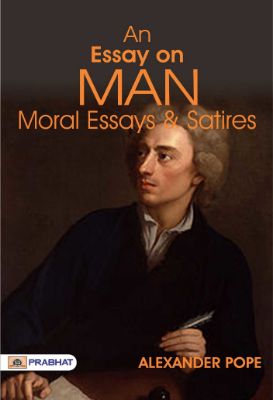
An Essay on Man Moral Essays and Satires by Alexander Pope
First published in the year 1734, Alexander Pope’s poem ‘An Essay on Man Moral Essays and Satires’ is concerned with the natural order God has decreed for man.

An Essay on the Foundations of Geometry by Bertrand Russell
My thanks are due to Mr G. F. Stout and Mr A. N. Whitehead for kindly reading my proofs, and helping me by many useful criticisms. To Mr Whitehead I owe, also, the inestimable assistance of constant criticism and suggestion throughout the course of construction, especially as regards the philosophical importance of projective Geometry.—from this book

An Eternal Career by Frank L. Hammer and Lydia Hammer
The purpose of this book is to acquaint readers with the fact that they are immortal souls embarked upon an eternal career.
The great masses of humanity have not commenced to live, are hardly aware of their possibilities. They express chiefly on the physical plane and, through ignorance of Life’s laws, frequently attract the undesirable and destructive. Conscious of only the material, they overdevelop it to the exclusion of the spiritual, becoming lopsided. They become great in one direction and remain small in all the others. A millionaire is usually regarded as a criterion of success. If his intellectual and spiritual development were as great as his material, he would be a composite of Croesus, Socrates and Christ—a Colossus.
An Examination of Weismannism by George John Romanes
As already stated in the Preface to the second edition of Darwin and after Darwin, Part I, severe and protracted illness has hitherto prevented me from proceeding to the publication of Part II. It is now more than a year since I had to suspend work of every kind, and therefore, although at that time Part II was almost ready for press, I have not yet been able to write its concluding chapters. Shortly before and during this interval Professor Weismann has produced his essays on Amphimixis and The Germ-plasm. These works present extensive additions to, and considerable modifications of, his previous theories as collected together in the English translation, under the title Essays on Heredity, Vol. I. Consequently, it has become necessary for me either to re-write the examination of his system which I had prepared for Part II of my own treatise, or else to leave that examination as it stood, and to add a further chapter dealing with those later developments of his system to which I have just alluded. After due reflection I have decided upon the latter course, because in this way we are most likely to obtain a clear view of the growth of Weismann’s elaborate structure of theories—a view which it is almost necessary, for the purposes of criticism, that we should obtain.
An Exhortation to Peace and Unity by John Bunyan
“Beloved, religion is the great bond of human society; and it were well if itself were kept within the bond of unity; and that it may so be, let us, according to the text, use our utmost endeavours “to keep the unity of the Spirit in the bond of peace.”
“These words contain a counsel and a caution: the counsel is, That we endeavour the unity of the Spirit; the caution is, That we do it in the bond of peace; as if I should say, I would have you live in unity, but yet I would have you to be careful that you do not purchase unity with the breach of charity.” -an excerpt

An Ideal Husband by Oscar Wilde
An Ideal Husband’ is an 1895 comedy stage play by Oscar Wilde. It revolves around blackmail and political corruption, and touches on the themes of public and private honour. The action is set in London, and takes place over the course of twenty-four hours.

An Ideal Kitchen by Maria Parloa
An Ideal Kitchen’ is a self-help book by Maria Parloa. This book is a guide for all the homemakers interested in bringing some interesting twists and atiquettes to their kitchen. It was first published in the year 1887.

An Inquiry into the Nature and Causes of the Wealth of Nations by Adam Smith
An Inquiry into the Nature and Causes of the Wealth of Nations’ is the magnum opus of the Scottish economist and moral philosopher Adam Smith. First published in 1776, the book offers one of the world’s first collected descriptions of what builds nations’ wealth, and is today a fundamental work in classical economics. By reflecting upon the economics at the beginning of the Industrial Revolution, the book touches upon such broad topics as the division of labour, productivity, and free markets.
An Introduction to Mathematics by Alfred North Whitehead
“The study of mathematics is apt to commence in disappointment. The important applications of the science, the theoretical interest of its ideas, and the logical rigour of its methods, all generate the expectation of a speedy introduction to processes of interest. We are told that by its aid the stars are weighed and the billions of molecules in a drop of water are counted. Yet, like the ghost of Hamlet’s father, this great science eludes the efforts of our mental weapons to grasp it—“ ’Tis here, ’tis there, ’tis gone”—and what we do see does not suggest the same excuse for illusiveness as sufficed for the ghost, that it is too noble for our gross methods. “A show of violence,” if ever excusable, may surely be “offered” to the trivial results which occupy the pages of some elementary mathematical treatises.” -an excerpt

An Introduction to Mythology by Lewis Spence
This volume is an outline of the principles of mythology, chiefly with reference to its more modern developments. Hand in hand with the sister sciences of folklore and comparative religion, it has advanced so rapidly within the last twenty years and altered so greatly from its ancient aspect that it seems an entirely new science.