
Nature
Showing 51–88 of 88 results

Birds and Nature, Vol. XII, No 4, November 1902
“Birds and Nature” was a monthly publication of the Nature Study Publishing Company of Chicago. It includes short poems, anecdotes and factual descriptions of birds, animals and other natural subjects with accompanying color plates. The magazine was published from 1897-1907 under the various titles, “Birds,” “Birds and all Nature,” “Nature and Art” and “Birds and Nature.” – Summary by J. M. Smallheer

Birds and Nature, Vol. XII, No 5, December 1902
“Birds and Nature” was a monthly publication of the Nature Study Publishing Company of Chicago. It includes short poems, anecdotes and factual descriptions of birds, animals and other natural subjects with accompanying color plates. The magazine was published from 1897-1907 under the various titles, “Birds,” “Birds and all Nature,” “Nature and Art” and “Birds and Nature.” – Summary by J. M. Smallheer

Birds in the Calendar
Delightful sketches of British wild birds – a bird for every month of the year from the pheasant in January to the robin in December. This collection of articles, reprinted in book form from the periodical The Outlook, is full of fascinating information about bird behaviour and habitat, as well as many interesting anecdotes. (Summary by Ruth Golding)

Birds of Song and Story
This mother and son team, each distinguished in their field, collaborate to give charming portraits of a dozen of our favorite song birds. Their use of poetry and flowing prose makes each of these birds come alive in and endearing and accessible way. – Summary by Larry Wilson

Birds, Vol. I, No 1, January 1897
Birds, Illustrated by Color Photography was a monthly publication of the Nature Study Publishing Company of Chicago. It includes short poems, anecdotes and factual descriptions of birds with accompanying color plates. The magazine was published from 1897-1907 under the various titles, “Birds,” “Birds and all Nature,” “Nature and Art” and “Birds and Nature.” Later volumes were expanded to include animals, plants, etc. Summary by J. M. Smallheer From the Preface of Vol 1 No 1: “Of all animated nature, birds are the most beautiful in coloring, most graceful in form and action, swiftest in motion and most perfect emblems of freedom. They are withal, very intelligent and have many remarkable traits, so that their habits and characteristics make a delightful study for all lovers of nature. In view of the facts, we feel that we are doing a useful work for the young, and one that will be appreciated by progressive parents, in placing within the easy possession of children in the homes these beautiful photographs of birds. The text is prepared with the view of giving the children as clear an idea as possible, of haunts, habits, characteristics and such other information as will lead them to love the birds and delight in their study and acquaintance.” NATURE STUDY PUBLISHING CO.

Birds, Vol. I, No 2, February 1897
Birds, Illustrated by Color Photography was a monthly publication of the Nature Study Publishing Company of Chicago. It includes short poems, anecdotes and factual descriptions of birds with accompanying color plates. The magazine was published from 1897-1907 under the various titles, “Birds,” “Birds and all Nature,” “Nature and Art” and “Birds and Nature.” Later volumes were expanded to include animals, plants, etc. Summary by J. M. Smallheer From the Preface of Vol 1 No 1: “Of all animated nature, birds are the most beautiful in coloring, most graceful in form and action, swiftest in motion and most perfect emblems of freedom. They are withal, very intelligent and have many remarkable traits, so that their habits and characteristics make a delightful study for all lovers of nature. In view of the facts, we feel that we are doing a useful work for the young, and one that will be appreciated by progressive parents, in placing within the easy possession of children in the homes these beautiful photographs of birds. The text is prepared with the view of giving the children as clear an idea as possible, of haunts, habits, characteristics and such other information as will lead them to love the birds and delight in their study and acquaintance.” NATURE STUDY PUBLISHING CO.
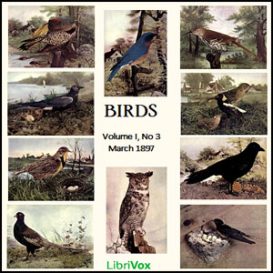
Birds, Vol. I, No 3, March 1897
Birds, Illustrated by Color Photography was a monthly publication of the Nature Study Publishing Company of Chicago. It includes short poems, anecdotes and factual descriptions of birds with accompanying color plates. The magazine was published from 1897-1907 under the various titles, “Birds,” “Birds and all Nature,” “Nature and Art” and “Birds and Nature.” Later issues were expanded to include animals, plants, etc. Summary by J. M. Smallheer
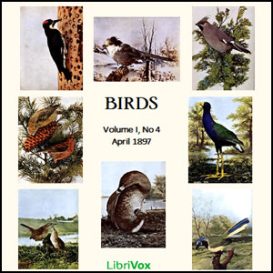
Birds, Vol. I, No 4, April 1897
Birds, Illustrated by Color Photography was a monthly publication of the Nature Study Publishing Company of Chicago. It includes short poems, anecdotes and factual descriptions of birds with accompanying color plates. The magazine was published from 1897-1907 under the various titles, “Birds,” “Birds and all Nature,” “Nature and Art” and “Birds and Nature.” Later issues were expanded to include animals, plants, etc. Summary by J. M. Smallheer

Birds, Vol. I, No 5, May 1897
Birds, Illustrated by Color Photography was a monthly publication of the Nature Study Publishing Company of Chicago. It includes short poems, anecdotes and factual descriptions of birds with accompanying color plates. The magazine was published from 1897-1907 under the various titles, “Birds,” “Birds and all Nature,” “Nature and Art” and “Birds and Nature.” Later issues were expanded to include animals, plants, etc. Summary by J. M. Smallheer
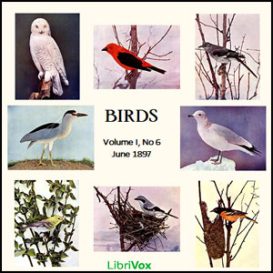
Birds, Vol. I, No 6, June 1897
Birds, Illustrated by Color Photography was a monthly publication of the Nature Study Publishing Company of Chicago. It includes short poems, anecdotes and factual descriptions of birds with accompanying color plates. The magazine was published from 1897-1907 under the various titles, “Birds,” “Birds and all Nature,” “Nature and Art” and “Birds and Nature.” Later issues were expanded to include animals, plants, etc. Summary by J. M. Smallheer

Birds, Vol. II, No 1, July 1897
Birds, Illustrated by Color Photography was a monthly publication of the Nature Study Publishing Company of Chicago. It includes short poems, anecdotes and factual descriptions of birds with accompanying color plates. The magazine was published from 1897-1907 under the various titles, “Birds,” “Birds and all Nature,” “Nature and Art” and “Birds and Nature.” Later issues were expanded to include animals, plants, etc. Summary by J. M. Smallheer
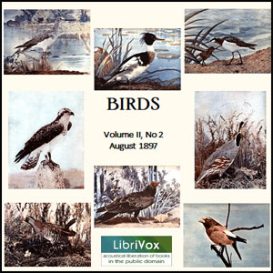
Birds, Vol. II, No 2, August 1897
Birds, Illustrated by Color Photography was a monthly publication of the Nature Study Publishing Company of Chicago. It includes short poems, anecdotes and factual descriptions of birds with accompanying color plates. The magazine was published from 1897-1907 under the various titles, “Birds,” “Birds and all Nature,” “Nature and Art” and “Birds and Nature.” Later issues were expanded to include animals, plants, etc. Summary by J. M. Smallheer

Birds, Vol. II, No 3, September 1897
Birds, Illustrated by Color Photography was a monthly publication of the Nature Study Publishing Company of Chicago. It includes short poems, anecdotes and factual descriptions of birds with accompanying color plates. The magazine was published from 1897-1907 under the various titles, “Birds,” “Birds and all Nature,” “Nature and Art” and “Birds and Nature.” Later issues were expanded to include animals, plants, etc. Summary by J. M. Smallheer
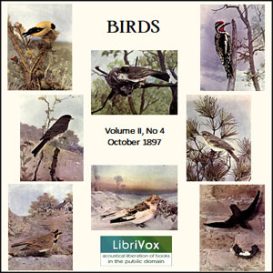
Birds, Vol. II, No 4, October 1897
Birds, Illustrated by Color Photography was a monthly publication of the Nature Study Publishing Company of Chicago. It includes short poems, anecdotes and factual descriptions of birds with accompanying color plates. The magazine was published from 1897-1907 under the various titles, “Birds,” “Birds and all Nature,” “Nature and Art” and “Birds and Nature.” Later issues were expanded to include animals, plants, etc. Summary by J. M. Smallheer
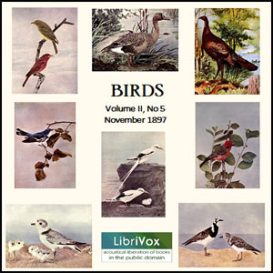
Birds, Vol. II, No 5, November 1897
Birds, Illustrated by Color Photography was a monthly publication of the Nature Study Publishing Company of Chicago. It includes short poems, anecdotes and factual descriptions of birds with accompanying color plates. The magazine was published from 1897-1907 under the various titles, “Birds,” “Birds and all Nature,” “Nature and Art” and “Birds and Nature.” Later issues were expanded to include animals, plants, etc. Summary by J. M. Smallheer
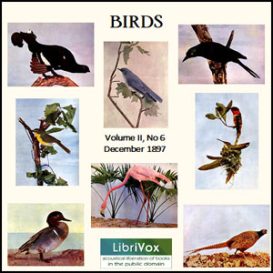
Birds, Vol. II, No 6, December 1897
Birds, Illustrated by Color Photography was a monthly publication of the Nature Study Publishing Company of Chicago. It includes short poems, anecdotes and factual descriptions of birds with accompanying color plates. The magazine was published from 1897-1907 under the various titles, “Birds,” “Birds and all Nature,” “Nature and Art” and “Birds and Nature.” Later issues were expanded to include animals, plants, etc. Summary by J. M. Smallheer

Birds, Vol. III, No 1, January 1898
Birds, Illustrated by Color Photography was a monthly publication of the Nature Study Publishing Company of Chicago. It includes short poems, anecdotes and factual descriptions of birds with accompanying color plates. The magazine was published from 1898-1907 under the various titles, “Birds,” “Birds and all Nature,” “Nature and Art” and “Birds and Nature.” Later issues were expanded to include animals, plants, etc. Summary by J. M. Smallheer
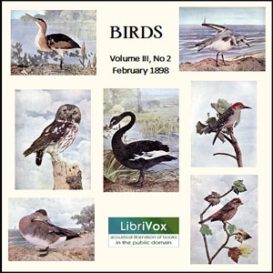
Birds, Vol. III, No 2, February 1898
Birds, Illustrated by Color Photography was a monthly publication of the Nature Study Publishing Company of Chicago. It includes short poems, anecdotes and factual descriptions of birds with accompanying color plates. The magazine was published from 1898-1907 under the various titles, “Birds,” “Birds and all Nature,” “Nature and Art” and “Birds and Nature.” Later issues were expanded to include animals, plants, etc. Summary by J. M. Smallheer
Birds, Vol. III, No 3, March 1898
Birds, Illustrated by Color Photography was a monthly publication of the Nature Study Publishing Company of Chicago. It includes short poems, anecdotes and factual descriptions of birds with accompanying color plates. The magazine was published from 1898-1907 under the various titles, “Birds,” “Birds and all Nature,” “Nature and Art” and “Birds and Nature.” Later issues were expanded to include animals, plants, etc. Summary by J. M. Smallheer
Birds, Vol. III, No 4, April 1898
Birds, Illustrated by Color Photography was a monthly publication of the Nature Study Publishing Company of Chicago. It includes short poems, anecdotes and factual descriptions of birds with accompanying color plates. The magazine was published from 1898-1907 under the various titles, “Birds,” “Birds and all Nature,” “Nature and Art” and “Birds and Nature.” Later issues were expanded to include animals, plants, etc. Summary by J. M. Smallheer
Birds, Vol. III, No 5, May 1898
Birds, Illustrated by Color Photography was a monthly publication of the Nature Study Publishing Company of Chicago. It includes short poems, anecdotes and factual descriptions of birds with accompanying color plates. The magazine was published from 1898-1907 under the various titles, “Birds,” “Birds and all Nature,” “Nature and Art” and “Birds and Nature.” Later issues were expanded to include animals, plants, etc. Summary by J. M. Smallheer

Birds, Vol. III, No 6, June 1898
] Birds, Illustrated by Color Photography was a monthly publication of the Nature Study Publishing Company of Chicago. It includes short poems, anecdotes and factual descriptions of birds with accompanying color plates. The magazine was published from 1898-1907 under the various titles, “Birds,” “Birds and all Nature,” “Nature and Art” and “Birds and Nature.” Later issues were expanded to include animals, plants, etc. Summary by J. M. Smallheer

Book of the Damned
The Book of the Damned was the first published nonfiction work of the author Charles Fort (first edition 1919). Dealing with various types of anomalous phenomena including UFOs, strange falls of both organic and inorganic materials from the sky, odd weather patterns, the possible existence of creatures generally held to be mythological, disappearances of people under strange circumstances, and many other phenomena, the book is historically considered to be the first written in the specific field of anomalistics. – Summary from Wikipedia


Cosmos: A Sketch of a Physical Description of The Universe: Introduction
Friedrich Wilhelm Heinrich Alexander von Humboldt was a Prussian geographer, naturalist, explorer, and influential proponent of romantic philosophy. Many consider him to be the last of the great polymaths. After his death in 1859, the scientific world began to divide into separate disciplines, each with its own knowledgeable but narrowly defined experts. Humboldt?s mind encompassed all that was then known of nature in one great whole. He could well be considered the father of modern ecology and earth studies. His great scientific and literary achievement was the multi-volume Cosmos, twenty years in the writing, in which he attempted to describe the known physical world. Humboldt?s lyrical style of writing influenced the subsequent genre of nature writing as well as many of the towering figures of the Romantic movement. This LibriVox recording is of the Introduction to Cosmos. The Introduction gives a good measure of breadth of Humboldt?s mind and is a pleasure to read or hear because of its literary felicity. This reading omits the copious footnotes in favor of maintaining the flow of thought of the body of the text. Also included are the translator?s preface which contains a short biography of Humboldt as well as the author?s own preface. – Summary by Wikipedia and david wales

Crops and Methods for Soil Improvement
This book is not a technical treatise and is designed only to point out the plain, every-day facts in the natural scheme of making and keeping soils productive. It is concerned with the crops, methods, and fertilizers that favor the soil. The viewpoint, all the time, is that of the practical man who wants cash compensation for the intelligent care he gives to his land…Experiment stations and practical farmers have developed a dependable science within recent years, and there is no jarring of observed facts when we get hold of the simple philosophy of it all. Summary from the Introduction


Short Nonfiction Collection Vol. 006
A collection of fifteen short nonfiction works in the public domain. The essays, speeches and reports included in this collection were independently selected by the readers, and the topics encompass history, politics, medicine, nature and religion. Included in this collection are speeches by George Washington and Abraham Lincoln, Martin Luther’s Ninety-five Theses, several interesting or historic articles from Vanity Fair and the NY times, as well as writings of Eugene Debs, Alexander von Humboldt, Lena Morrow Lewis, Joseph Lister and C. M. Ellis. (summary by J. M. Smallheer)

Spices, their histories
A surprisingly complete and informative 64-page booklet describing common spices used in cooking and for other purposes. Written especially for grocers, but helpful for all interested. – Summary by KevinS

The American Bee Journal, Vol. XXXIII, No. 4, Jan 1894
The American Bee Journal is the ?oldest bee paper in America established in 1861 devoted to scientific bee-culture and the production and sale of pure honey. Published every Wednesday, by Thomas G. Newman, Editor and Proprietor? In this issues are topics from “Selling Extracted Honey at Retail” to “Danger in Climbing for Swarms” – Summary by Larry Wilson

The Book of Camping and Woodcraft: A Guidebook for Those Who Travel in the Wilderness
In the Introduction to Camping and Woodcraft, Horace Kephart wrote: ?My one aim in writing this little book is to make it of practical service to those who seek rest or sport in the wilderness, or whose business calls them thither.? The author further described the content of this book: ?In the following chapters I offer some suggestions on outfitting, making camps, dressing and keeping game and fish, camp cookery, forest travel, how to avoid getting lost, and what to do if one does get lost, living off the country, what the different species of trees are good for (from a camper’s viewpoint), backwoods handicrafts in wood, bark, skins and other raw materials, the treatment of wounds and other injuries, and some other branches of woodcraft that may be of service when one is far from shops and from hired help.? Camping and Woodcraft was his first book and is actually a collection of articles that had been published in Field and Stream magazine. Horace Kephart, born in 1862, was raised in Pennsylvania and Iowa then trained as a librarian at Cornell University. He worked in St Louis near the Ozark mountains for a portion of his life (1890 ? 1904) then moved to western North Carolina where he lived near Hazel Creek in the Great Smoky Mountains then near Bryson City. Kephart was a campaigner for the establishment of the Great Smoky Mountain National Park, which was created in 1926. He was the author of a number of books and articles on the outdoors. (Summary by Gail Timmerman-Vaughan, based on Wikipedia – Horace Kephart)

The Book of Love
Translated from Italian, it delves into the physiology of love from a scientific standpoint, in beautiful writing.

The Book of the National Parks
Robert Sterling Yard was an American writer, journalist, and wilderness activist. Born in Haverstraw, New York, Yard graduated from Princeton University and spent the first twenty years of his career in the editing and publishing business. In 1915, he was recruited by his friend Stephen Mather to help publicize the need for an independent national park agency. Their numerous publications were part of a movement that resulted in legislative support for a National Park Service (NPS) in 1916. Yard worked to promote the national parks as well as educate Americans about their use. Creating high standards based on aesthetic ideals for park selection, he also opposed commercialism and industrialization of what he called “America’s masterpieces”. In 1935, he became one of the eight founding members of The Wilderness Society and acted as its first president from 1937 until his death eight years later. Yard is now considered an important figure in the modern wilderness movement. In the preface to this book, published in 1919, he writes, “In offering the American public a carefully studied outline of its national park system, I have two principal objects. The one is to describe and differentiate the national parks in a manner which will enable the reader to appreciate their importance, scope, meaning, beauty, manifold uses and enormous value to individual and nation. The other is to use these parks, in which Nature is writing in large plain lines the story of America’s making, as examples illustrating the several kinds of scenery, and what each kind means in terms of world building; in other words, to translate the practical findings of science into unscientific phrase for the reader’s increased profit and pleasure, not only in his national parks but in all other scenic places great and small.” (summary from Wikipedia)