
Competitive Books
Showing 601–650 of 4042 results
2023-24 UP B.Ed. Art Solved Papers & Practice Book
2023-24 UP B.Ed. Art Solved Papers & Practice Book

2023-24 UP B.Ed. Science Solved Papers & Practice Book
2023-24 UP B.Ed. Science Solved Papers & Practice Book

2023-24 UP PCS Mains General Hindi, Essay & General Studies
2023-24 UP PCS Mains General Hindi, Essay & General Studies
2023-24 UP,B.Ed Agriculture GK Hindi & Reasoning
2023-24 UP,B,Ed. Agriculture GK, Hindi & Reasoning Solved Papers & Practice Book
2023-24 UP,B.Ed Commerce GK Hindi & Reasoning
2023-24 UP,B,Ed. Commerce GK, Hindi & Reasoning Solved Papers & Practice Book

2023-24 UPPCL/UPSSSC/SSC JE Study Material Electrical Engineering
2023-24 UPPCL/UPSSSC/SSC JE Study Material Electrical Engineering

2023-24 UPPCL/UPSSSC/SSC JE Study Material Electrical Engineering Vol.2
2023-24 UPPCL/UPSSSC/SSC JE Study Material Electrical Engineering Vol.2
2023-24 UPPCS
General Studies Vol.2 Indian Constitution & Governance Previous Solved Papers
2023-24 UPPCS – General Studies (General Science & Technology)
2023-24 UPPCS – General Studies (General Science & Technology)


2023-24 UPPCS General Studies & C-SAT
2023-24 UPPCS General Studies & C-SAT Practice Book

2023-24 UPPCS General Studies Vol.4 Geography, Environment & Ecology
2023-24 UPPCS General Studies Vol.4 Geography, Environment & Ecology


2023-24 UPPSC AE Technical/Non-Technical Civil Engineering
2023-24 UPPSC AE Technical/Non-Technical Civil Engineering
2023-24 UPSC IAS & State PCS General Studies Vol.-2 Geography ( India & World)
2023-24 UPSC IAS & State PCS General Studies Vol.-2 Geography ( India & World)
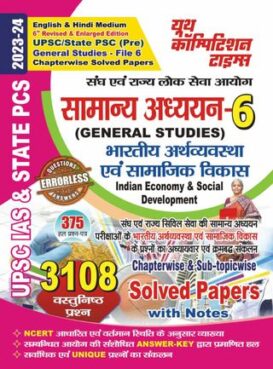
2023-24 UPSC IAS & State PCS General Studies Vol.6 Indian Economy & Social Development
2023-24 UPSC IAS & State PCS General Studies Vol.6 Indian Economy & Social Development

2023-24 UPSC IAS/State PCS General Studies-01 Indian Constitution & Polity
2023-24 UPSC IAS/State PCS General Studies-01 Indian Constitution & Polity

2023-24 UPSC IAS/States PCS General Studies Vo,3 (General Science & Technology)
2023-24 UPSC IAS/States PCS General Studies Vo,3 (General Science & Technology)
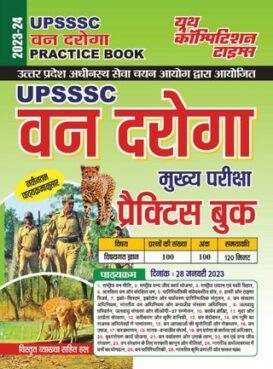
2023-24 UPSSSC Forest Inspector (Main)
2023-24 UPSSSC Forest Inspector (Main)Practice Book


2023-24 UPSSSC Instructors Civil Draftsman/Surveyor
2023-24 UPSSSC Instructors Civil Draftsman/Surveyor

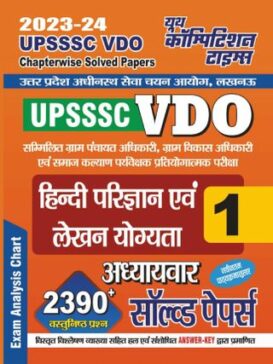
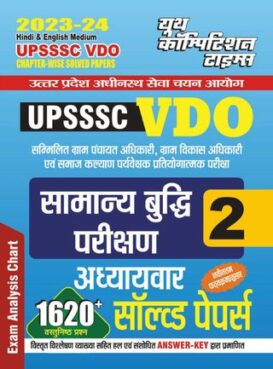


2023-24 UPSSSC/VDO Vol.-3 General Knowledge
2023-24 UPSSSC/VDO Vol.-3 General Knowledge Solved Papers
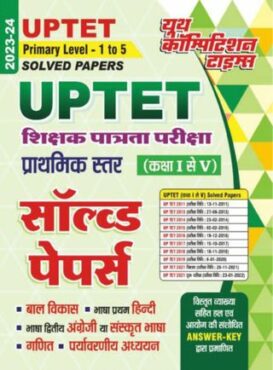
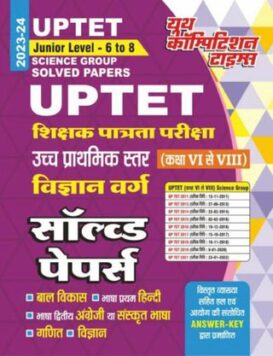
2023-24 UPTET Science Group Practice Set
2023-24 UPTET Science Group Practice Set Solved Papers
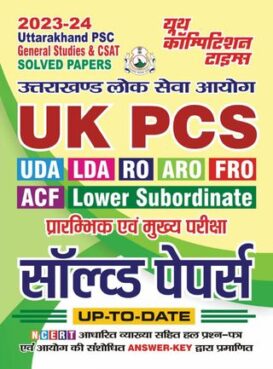
2023-24 Uttarakhand PSC General Studies & CSAT
2023-24 Uttarakhand PSC General Studies & CSAT

2023-24 WBPSC JE/AE Civil Engineering
2023-24 WBPSC JE/AE Civil Engineering Solved Papers

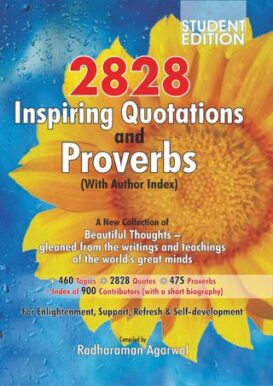
2828 Inspiring Quotations and Proverbs (with Author Index)
A Modern Approach to pass various competitive exams based on the current syllabus and helpful to excel in 2828 Inspiring Quotations and Proverbs (with Author Index) exams and perform best in their career and comes with detailed solutions, not just the answer key, for each and every question included in it. It promotes self-evaluation by enabling you to not only practice and revise concepts but also keep track of your progress. This book allows you to clarify your doubts and remove the fears generally associated with exams, improve your concentration and hone your time management skills, enabling you to answer the questions within the given time frame.

30 Days Crash Course for NEET Biology
Revise the entire syllabus of NEET Biology with day wise plan, practice questions with practice papers & previous year paper.
Content :
1 Biological Classification (Living World + Biological Classification)
2 Plant Kingdom
3 Animal Kingdom
4 Morphology and Anatomy of Flowering Plants
5 Structural Organization in Animals
6 Cell and its Structural Components (Cell and Biomolecules)
7 Cell Cycle and Cell division
Test 1
8 Transports in Plants
9 Mineral Nutrition
10 Photosynthesis
11 Respiration in Plants
12 Plant Growth and Development
Test 2
13 Digestion and Absorption
14 Breathing and Exchange of Gases
15 Body Fluids and Circulation
16 Excretory Products and their elimination
17 Locomotion and Movement
18 Neural Control and Coordination
19 Chemical Coordination and Integration
Test 3
20 Sexual Reproduction in Flowering Plants
21 Human Reproduction and Reproductive Health
22 Principles of Inheritance and Variation
23 Molecular Basis of Inheritance
24 Evolution
Test 4
25 Human Health and Diseases
26 Biology in Human Welfare (Strategies + Microbes)
27 Biotechnology (Principles and Processes + Biotechnology & its Application)
28 Ecosystem (Organism & Population + Ecosystem)
29 Biodiversity and Conservation
30 Environmental Issues
Test 5
Mock Test Papers
Answer Keys (Unit Tests)
NEET Solved Paper 2017

30 Days Crash Course for NEET Chemistry
30 days NEET a revision cum crash course Chemistry provides a speedy revision plan for complete Chemistry in 30 days. It comes with concise review of all the concepts as per the latest syllabus and emphasize on the formulas and facts in an easy and tabular form. It is a focused program study for the NEET aspirant’s full preparation. Complete book divides chapter revision in day-wise manner with question practice (Exam drill) to ensure full revision. 5 unit test are given after certain number of days to check the effectiveness of revision and analysis of the performance. One model test paper is given on 30th day with answer keys of every unit test and solved NEET 2017 exam paper.
Revise the entire syllabus of NEET Chemistry with day wise plan, practice questions with practice papers & previous year paper.
Content :
1 Some Basic Concept of Chemistry
2 Structure of Atom
3 Classification of Elements & Periodicity in Properties
4 Chemical Bonding and Molecular Structure
5 States of Matter (Gases and Liquids)
6 Thermodynamics
7 Equilibrium
8 Redox Reactions
UNIT TEST 1
9 Hydrogen
10 The s-Block Elements
11 The p-Block Elements (Group 13 and 14)
12 Organic Chemistry – Some Basic Principles and Techniques
13 Hydrocarbons
14 Environmental Chemistry
UNIT TEST 2
15 Solid State
16 Solutions
17 Electrochemistry
18 Chemical Kinetics
19 Surface Chemistry
UNIT TEST 3
20 General Principle and Processes of Isolation of Elements
21 The p-Block Elements (Group 15 to 18)
22 The d- and f-Block Elements
23 Coordination Compounds
UNIT TEST 4
24 Haloalkans and Haloarenes
25 Alcohols, Phenols and Ethers
26 Aldehydes, Ketones and Carboxylic Acids
27 Amines
28 Biomolecules
29 Polymers
30 Chemistry in Everyday Life
UNIT TEST 5
Mock Test Papers
Answer Keys (Unit Tests)
NEET Solved Paper 2017
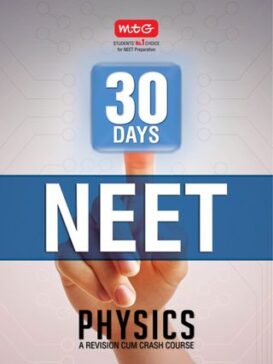
30 Days Crash Course for NEET Physics
30 days NEET a revision cum crash course Physics provides a speedy revision plan for complete Physics in 30 days. It comes with concise review of all the concepts as per the latest syllabus and emphasize on the formulas and facts in an easy and tabular form. It is a focused program study for the NEET aspirant’s full preparation. Complete book divides chapter revision in day-wise manner with question practice (Exam drill) to ensure full revision. 5 unit test are given after certain number of days to check the effectiveness of revision and analysis of the performance. One model test paper is given on 30th day with answer keys of every unit test and solved NEET 2017 exam paper. Revise the entire syllabus of NEET Physics with day wise plan, practice questions with practice papers & previous year paper.
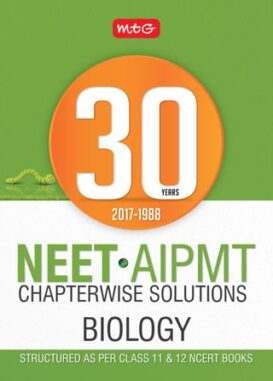
30 Years NEET-AIPMT Chapterwise Solutions-Biology
30 years NEET/AIPMT Chapter wise solutions Biology is a chapter wise question bank having questions from past 30 years NEET/AIPMT exam. This book is updated with the questions of NEET 2017 exam and Chapter wise questions of last 30 years’ (1988-2017) of AIPMT/NEET with detailed answers for easy and clear understanding of NEET Exam pattern. Chapter wise questions gives a clear idea regarding chapter weightage. Once after completing the chapter, attempting questions from previous years exams give a real indication of the efforts required.
TABLE OF CONTENT:
1. The Living World
2. Biological Classification
3. Plant Kingdom
4. Animal Kingdom
5. Morphology of Flowering Plants
6. Anatomy of Flowering Plants
7. Structural Organisation in Animals
8. Cell-The Unit of Life
9. Biomolecules
10. Cell Cycle and Cell Division
11. Transport in Plants
12. Mineral Nutrition
13. Photosynthesis in Higher Plants
14. Respiration in Plants
15. Plant Growth and Development
16. Digestion and Absorption
17. Breathing and Exchange of Gases
18. Body Fluids and Circulation
19. Excretory Products and Their Elimination
20. Locomotion and Movement
21. Neural Control and Coordination
22. Chemical Coordination and Integration.
23. Reproduction in Organisms
24. Sexual Reproduction in Flowering Plants
25. Human Reproduction
26. Reproductive Health
27. Principles of Inheritance and Variation.
28. Molecular Basis of Inheritance
29. Evolution
30. Human Health and Diseases
31. Strategies for Enhancement in
Food Production
32. Microbes in Human Welfare
33. Biotechnology: Principles and Processes.
34. Biotechnology and Its Applications.
35. Organisms and Populations.
36. Ecosystem.
37. Biodiversity and Conservation.
38. Environmental Issues
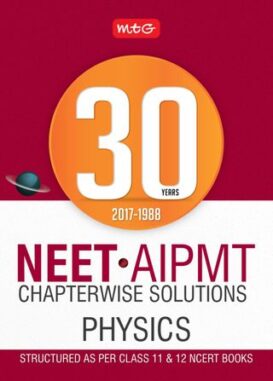
30 Years NEET-AIPMT Chapterwise Solutions-Physics
30 years NEET/AIPMT Chapter wise solutions Physics is a chapter wise question bank having questions from past 30 years NEET/AIPMT exam. This book is updated with the questions of NEET 2017 exam and Chapter wise questions of last 30 years’ (1988-2017) of AIPMT/NEET with detailed answers for easy and clear understanding of NEET Exam pattern. Chapter wise questions gives a clear idea regarding chapter weightage. Once after completing the chapter, attempting questions from previous years exams give a real indication of the efforts required.
TABLE OF CONTENT:
1. Units and Measurement
2. Motion in a Straight Line
3. Motion in a Plane
4. Laws of Motion
5. Work, Energy and Power
6. System of Particles and Rotational Motion
7. Gravitation
8. Properties of Matter
9. Thermodynamics and Kinetic Theory
10. Oscillations
11. Waves
12. Electrostatics
13. Current Electricity
14. Moving Charges and Magnetism
15. Magnetism and Matter
16. Electromagnetic Induction and Alternating Current
17. Electromagnetic Waves
18. Optics
19. Dual Nature of Radiation and Matter
20. Atoms and Nuclei
21. Semiconductor Electronics : Materials, Devices and Simple Circuits
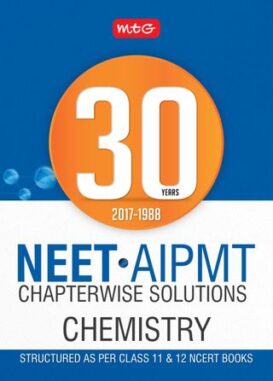
30 Years NEET-AIPMTChapterwise Solutions-Chemistry
30 years NEET/AIPMT Chapter wise solutions Chemistry is a chapter wise question bank having questions from past 30 years NEET/AIPMT exam. This book is updated with the questions of NEET 2017 exam and Chapter wise questions of last 30 years’ (1988-2017) of AIPMT/NEET with detailed answers for easy and clear understanding of NEET Exam pattern. Chapter wise questions gives a clear idea regarding chapter weightage. Once after completing the chapter, attempting questions from previous years exams give a real indication of the efforts required.
TABLE OF CONTENT:
1. Some Basic Concepts of Chemistry
2. Structure of Atom
3. Classification of Elements and Periodicity in Properties
4. Chemical Bonding and Molecular Structure
5. States of Matter : Gases and Liquids
6. Thermodynamics
7. Equilibrium
8. Redox Reactions
9. Hydrogen
10. s-Block Elements
11. p-Block Elements (Group 13 and 14)
12. Organic Chemistry – Some Basic Principles and Techniques
13. Hydrocarbons
14. Environmental Chemistry
15. Solid State
16. Solutions
17. Electrochemistry
18. Chemical Kinetics
19. Surface Chemistry
20. General Principles and Processes of Isolation of Elements
21. p-Block Elements (Group 15 to 18)
22. d-and f-Block Elements
23. Coordination Compounds
24. Haloalkanes and Haloarenes
25. Alcohols, Phenols and Ethers
26. Aldehydes, Ketones and Carboxylic Acids
27. Organic Compounds Containing Nitrogen
28. Biomolecules
29. Polymers
30. Chemistry in Everyday Life
31. Nuclear Chemistry .

3D Printing Made Simple
Complete guide to explore 3d printing, scanning, sculpting, and milling.
Key Features
● Step-by-step guide to learn the techniques, methodologies, and finished products
● Learn to employ 3D technology in new and inventive ways
● Know to enlarge, reduce, and repurpose existing artwork.
● Book is a practical tutorial, packed with real-world case studies to help you to design models that print right the first time.
● Learn to design models, choose materials, work with different printers, and integrate 3D printing with traditional prototyping to make techniques more efficient.
Description
This book 3D Printing Made Simple takes you through this exciting innovation, a technology called 3D Printing. It is revolutionising the way we do a lot of things and not just the creation of physical objects. The huge growth rates are a direct result of its applications for prototyping and mass production in a number of industries, thanks to an ever-increasing list of 3D printable materials. The World Economic Forum describes it as one of the four pillars of the 4th Industrial Revolution alongside AR, VR & AI, big data, blockchains etc. Many developing countries like India, completely missed the 1st two industrial revolutions (steam & petrol engines) and partially benefitted in the 3rd (electronics/computers). Now can we afford to not, or just partially participate in the 4th Industrial Revolution?
Book adopts a practical approach, with step-by-step instructions to help guide readers. Lots of screenshots are given for each and every step where needed to design a high-quality model in Blender for 3D printing.
What will you learn
● 3D Printing/3D Prototyping, its history, process, applications, SDG Goals.
● 3D Printing technologies, SWOT Analysis
Who this book is for
If you are a Blender user or someone who wants to make 3D objects suitable for 3D printing and if you are familiar with SketchUp and want to print the models which you have designed, then this book is ideal for you.
Table of Contents
1. Part 1
1.1 What is the future going to be? An overview
1.2 4th Industrial Revolution
1.3 History of 3D Printing and what humans want
1.4 What is 3D Printing or 3D Prototyping and how it differs from the traditional prototyping?.
1.5 The process of 3D Printing
1.6 Example & Applications of 3D Printing
1.7 Utility of 3D Printing
1.8 Comparing 3D Printing to Mass Production
1.9 UN – SDG Goals & 3D Printing
2. Part 2
2.1 Advantages of 3D Printing & where it’s ideal
2.2 Kinds of 3D Printing technologies
2.3 SWOT Analysis of 3D Printing & survey results
2.4 3D Printing in Schools & Universities
2.5 3D Printing & how to empower ourselves
2.6 Introduction to Design
2.7 Live Use cases
2.8 What we do
About the Author
Avikshit Saras went to Modern School – New Delhi, thereafter did his BSc. from University of Bradford and his MSc. from the University of Manchester. He has been involved in numerous businesses such as financing of vehicles, dairying, pharmaceuticals, investment advisory and 3D printing. In 3D printing they engage with organisations for 3D printing training, consulting, prototyping services & installations. He has trained students & teachers at Indian School Muscat, DPS Faridabad, Pathways Gurgaon, Shalom, Scottish High, numerous other individuals, delivered 3DP talks in about 100 institutions and consulted for organisations.
His LinkedIn Profile: linkedin.com/in/avikshit-saras-msc-coo-748721aComplete guide to explore 3d printing, scanning, sculpting, and milling.
Key Features
● Step-by-step guide to learn the techniques, methodologies, and finished products
● Learn to employ 3D technology in new and inventive ways
● Know to enlarge, reduce, and repurpose existing artwork.
● Book is a practical tutorial, packed with real-world case studies to help you to design models that print right the first time.
● Learn to design models, choose materials, work with different printers, and integrate 3D printing with traditional prototyping to make techniques more efficient.
Description
This book 3D Printing Made Simple takes you through this exciting innovation, a technology called 3D Printing. It is revolutionising the way we do a lot of things and not just the creation of physical objects. The huge growth rates are a direct result of its applications for prototyping and mass production in a number of industries, thanks to an ever-increasing list of 3D printable materials. The World Economic Forum describes it as one of the four pillars of the 4th Industrial Revolution alongside AR, VR & AI, big data, blockchains etc. Many developing countries like India, completely missed the 1st two industrial revolutions (steam & petrol engines) and partially benefitted in the 3rd (electronics/computers). Now can we afford to not, or just partially participate in the 4th Industrial Revolution?
Book adopts a practical approach, with step-by-step instructions to help guide readers. Lots of screenshots are given for each and every step where needed to design a high-quality model in Blender for 3D printing.
What will you learn
● 3D Printing/3D Prototyping, its history, process, applications, SDG Goals.
● 3D Printing technologies, SWOT Analysis
Who this book is for
If you are a Blender user or someone who wants to make 3D objects suitable for 3D printing and if you are familiar with SketchUp and want to print the models which you have designed, then this book is ideal for you.
Table of Contents
1. Part 1
1.1 What is the future going to be? An overview
1.2 4th Industrial Revolution
1.3 History of 3D Printing and what humans want
1.4 What is 3D Printing or 3D Prototyping and how it differs from the traditional prototyping?.
1.5 The process of 3D Printing
1.6 Example & Applications of 3D Printing
1.7 Utility of 3D Printing
1.8 Comparing 3D Printing to Mass Production
1.9 UN – SDG Goals & 3D Printing
2. Part 2
2.1 Advantages of 3D Printing & where it’s ideal
2.2 Kinds of 3D Printing technologies
2.3 SWOT Analysis of 3D Printing & survey results
2.4 3D Printing in Schools & Universities
2.5 3D Printing & how to empower ourselves
2.6 Introduction to Design
2.7 Live Use cases
2.8 What we do
About the Author
Avikshit Saras went to Modern School – New Delhi, thereafter did his BSc. from University of Bradford and his MSc. from the University of Manchester. He has been involved in numerous businesses such as financing of vehicles, dairying, pharmaceuticals, investment advisory and 3D printing. In 3D printing they engage with organisations for 3D printing training, consulting, prototyping services & installations. He has trained students & teachers at Indian School Muscat, DPS Faridabad, Pathways Gurgaon, Shalom, Scottish High, numerous other individuals, delivered 3DP talks in about 100 institutions and consulted for organisations.
His LinkedIn Profile: linkedin.com/in/avikshit-saras-msc-coo-748721aComplete guide to explore 3d printing, scanning, sculpting, and milling.
Key Features
● Step-by-step guide to learn the techniques, methodologies, and finished products
● Learn to employ 3D technology in new and inventive ways
● Know to enlarge, reduce, and repurpose existing artwork.
● Book is a practical tutorial, packed with real-world case studies to help you to design models that print right the first time.
● Learn to design models, choose materials, work with different printers, and integrate 3D printing with traditional prototyping to make techniques more efficient.
Description
This book 3D Printing Made Simple takes you through this exciting innovation, a technology called 3D Printing. It is revolutionising the way we do a lot of things and not just the creation of physical objects. The huge growth rates are a direct result of its applications for prototyping and mass production in a number of industries, thanks to an ever-increasing list of 3D printable materials. The World Economic Forum describes it as one of the four pillars of the 4th Industrial Revolution alongside AR, VR & AI, big data, blockchains etc. Many developing countries like India, completely missed the 1st two industrial revolutions (steam & petrol engines) and partially benefitted in the 3rd (electronics/computers). Now can we afford to not, or just partially participate in the 4th Industrial Revolution?
Book adopts a practical approach, with step-by-step instructions to help guide readers. Lots of screenshots are given for each and every step where needed to design a high-quality model in Blender for 3D printing.
What will you learn
● 3D Printing/3D Prototyping, its history, process, applications, SDG Goals.
● 3D Printing technologies, SWOT Analysis
Who this book is for
If you are a Blender user or someone who wants to make 3D objects suitable for 3D printing and if you are familiar with SketchUp and want to print the models which you have designed, then this book is ideal for you.
Table of Contents
1. Part 1
1.1 What is the future going to be? An overview
1.2 4th Industrial Revolution
1.3 History of 3D Printing and what humans want
1.4 What is 3D Printing or 3D Prototyping and how it differs from the traditional prototyping?.
1.5 The process of 3D Printing
1.6 Example & Applications of 3D Printing
1.7 Utility of 3D Printing
1.8 Comparing 3D Printing to Mass Production
1.9 UN – SDG Goals & 3D Printing
2. Part 2
2.1 Advantages of 3D Printing & where it’s ideal
2.2 Kinds of 3D Printing technologies
2.3 SWOT Analysis of 3D Printing & survey results
2.4 3D Printing in Schools & Universities
2.5 3D Printing & how to empower ourselves
2.6 Introduction to Design
2.7 Live Use cases
2.8 What we do
About the Author
Avikshit Saras went to Modern School – New Delhi, thereafter did his BSc. from University of Bradford and his MSc. from the University of Manchester. He has been involved in numerous businesses such as financing of vehicles, dairying, pharmaceuticals, investment advisory and 3D printing. In 3D printing they engage with organisations for 3D printing training, consulting, prototyping services & installations. He has trained students & teachers at Indian School Muscat, DPS Faridabad, Pathways Gurgaon, Shalom, Scottish High, numerous other individuals, delivered 3DP talks in about 100 institutions and consulted for organisations.
His LinkedIn Profile: linkedin.com/in/avikshit-saras-msc-coo-748721aComplete guide to explore 3d printing, scanning, sculpting, and milling.
Key Features
● Step-by-step guide to learn the techniques, methodologies, and finished products
● Learn to employ 3D technology in new and inventive ways
● Know to enlarge, reduce, and repurpose existing artwork.
● Book is a practical tutorial, packed with real-world case studies to help you to design models that print right the first time.
● Learn to design models, choose materials, work with different printers, and integrate 3D printing with traditional prototyping to make techniques more efficient.
Description
This book 3D Printing Made Simple takes you through this exciting innovation, a technology called 3D Printing. It is revolutionising the way we do a lot of things and not just the creation of physical objects. The huge growth rates are a direct result of its applications for prototyping and mass production in a number of industries, thanks to an ever-increasing list of 3D printable materials. The World Economic Forum describes it as one of the four pillars of the 4th Industrial Revolution alongside AR, VR & AI, big data, blockchains etc. Many developing countries like India, completely missed the 1st two industrial revolutions (steam & petrol engines) and partially benefitted in the 3rd (electronics/computers). Now can we afford to not, or just partially participate in the 4th Industrial Revolution?
Book adopts a practical approach, with step-by-step instructions to help guide readers. Lots of screenshots are given for each and every step where needed to design a high-quality model in Blender for 3D printing.
What will you learn
● 3D Printing/3D Prototyping, its history, process, applications, SDG Goals.
● 3D Printing technologies, SWOT Analysis
Who this book is for
If you are a Blender user or someone who wants to make 3D objects suitable for 3D printing and if you are familiar with SketchUp and want to print the models which you have designed, then this book is ideal for you.
Table of Contents
1. Part 1
1.1 What is the future going to be? An overview
1.2 4th Industrial Revolution
1.3 History of 3D Printing and what humans want
1.4 What is 3D Printing or 3D Prototyping and how it differs from the traditional prototyping?.
1.5 The process of 3D Printing
1.6 Example & Applications of 3D Printing
1.7 Utility of 3D Printing
1.8 Comparing 3D Printing to Mass Production
1.9 UN – SDG Goals & 3D Printing
2. Part 2
2.1 Advantages of 3D Printing & where it’s ideal
2.2 Kinds of 3D Printing technologies
2.3 SWOT Analysis of 3D Printing & survey results
2.4 3D Printing in Schools & Universities
2.5 3D Printing & how to empower ourselves
2.6 Introduction to Design
2.7 Live Use cases
2.8 What we do
About the Author
Avikshit Saras went to Modern School – New Delhi, thereafter did his BSc. from University of Bradford and his MSc. from the University of Manchester. He has been involved in numerous businesses such as financing of vehicles, dairying, pharmaceuticals, investment advisory and 3D printing. In 3D printing they engage with organisations for 3D printing training, consulting, prototyping services & installations. He has trained students & teachers at Indian School Muscat, DPS Faridabad, Pathways Gurgaon, Shalom, Scottish High, numerous other individuals, delivered 3DP talks in about 100 institutions and consulted for organisations.
His LinkedIn Profile: linkedin.com/in/avikshit-saras-msc-coo-748721aComplete guide to explore 3d printing, scanning, sculpting, and milling.
Key Features
● Step-by-step guide to learn the techniques, methodologies, and finished products
● Learn to employ 3D technology in new and inventive ways
● Know to enlarge, reduce, and repurpose existing artwork.
● Book is a practical tutorial, packed with real-world case studies to help you to design models that print right the first time.
● Learn to design models, choose materials, work with different printers, and integrate 3D printing with traditional prototyping to make techniques more efficient.
Description
This book 3D Printing Made Simple takes you through this exciting innovation, a technology called 3D Printing. It is revolutionising the way we do a lot of things and not just the creation of physical objects. The huge growth rates are a direct result of its applications for prototyping and mass production in a number of industries, thanks to an ever-increasing list of 3D printable materials. The World Economic Forum describes it as one of the four pillars of the 4th Industrial Revolution alongside AR, VR & AI, big data, blockchains etc. Many developing countries like India, completely missed the 1st two industrial revolutions (steam & petrol engines) and partially benefitted in the 3rd (electronics/computers). Now can we afford to not, or just partially participate in the 4th Industrial Revolution?
Book adopts a practical approach, with step-by-step instructions to help guide readers. Lots of screenshots are given for each and every step where needed to design a high-quality model in Blender for 3D printing.
What will you learn
● 3D Printing/3D Prototyping, its history, process, applications, SDG Goals.
● 3D Printing technologies, SWOT Analysis
Who this book is for
If you are a Blender user or someone who wants to make 3D objects suitable for 3D printing and if you are familiar with SketchUp and want to print the models which you have designed, then this book is ideal for you.
Table of Contents
1. Part 1
1.1 What is the future going to be? An overview
1.2 4th Industrial Revolution
1.3 History of 3D Printing and what humans want
1.4 What is 3D Printing or 3D Prototyping and how it differs from the traditional prototyping?.
1.5 The process of 3D Printing
1.6 Example & Applications of 3D Printing
1.7 Utility of 3D Printing
1.8 Comparing 3D Printing to Mass Production
1.9 UN – SDG Goals & 3D Printing
2. Part 2
2.1 Advantages of 3D Printing & where it’s ideal
2.2 Kinds of 3D Printing technologies
2.3 SWOT Analysis of 3D Printing & survey results
2.4 3D Printing in Schools & Universities
2.5 3D Printing & how to empower ourselves
2.6 Introduction to Design
2.7 Live Use cases
2.8 What we do
About the Author
Avikshit Saras went to Modern School – New Delhi, thereafter did his BSc. from University of Bradford and his MSc. from the University of Manchester. He has been involved in numerous businesses such as financing of vehicles, dairying, pharmaceuticals, investment advisory and 3D printing. In 3D printing they engage with organisations for 3D printing training, consulting, prototyping services & installations. He has trained students & teachers at Indian School Muscat, DPS Faridabad, Pathways Gurgaon, Shalom, Scottish High, numerous other individuals, delivered 3DP talks in about 100 institutions and consulted for organisations.
His LinkedIn Profile: linkedin.com/in/avikshit-saras-msc-coo-748721aComplete guide to explore 3d printing, scanning, sculpting, and milling.
Key Features
● Step-by-step guide to learn the techniques, methodologies, and finished products
● Learn to employ 3D technology in new and inventive ways
● Know to enlarge, reduce, and repurpose existing artwork.
● Book is a practical tutorial, packed with real-world case studies to help you to design models that print right the first time.
● Learn to design models, choose materials, work with different printers, and integrate 3D printing with traditional prototyping to make techniques more efficient.
Description
This book 3D Printing Made Simple takes you through this exciting innovation, a technology called 3D Printing. It is revolutionising the way we do a lot of things and not just the creation of physical objects. The huge growth rates are a direct result of its applications for prototyping and mass production in a number of industries, thanks to an ever-increasing list of 3D printable materials. The World Economic Forum describes it as one of the four pillars of the 4th Industrial Revolution alongside AR, VR & AI, big data, blockchains etc. Many developing countries like India, completely missed the 1st two industrial revolutions (steam & petrol engines) and partially benefitted in the 3rd (electronics/computers). Now can we afford to not, or just partially participate in the 4th Industrial Revolution?
Book adopts a practical approach, with step-by-step instructions to help guide readers. Lots of screenshots are given for each and every step where needed to design a high-quality model in Blender for 3D printing.
What will you learn
● 3D Printing/3D Prototyping, its history, process, applications, SDG Goals.
● 3D Printing technologies, SWOT Analysis
Who this book is for
If you are a Blender user or someone who wants to make 3D objects suitable for 3D printing and if you are familiar with SketchUp and want to print the models which you have designed, then this book is ideal for you.
Table of Contents
1. Part 1
1.1 What is the future going to be? An overview
1.2 4th Industrial Revolution
1.3 History of 3D Printing and what humans want
1.4 What is 3D Printing or 3D Prototyping and how it differs from the traditional prototyping?.
1.5 The process of 3D Printing
1.6 Example & Applications of 3D Printing
1.7 Utility of 3D Printing
1.8 Comparing 3D Printing to Mass Production
1.9 UN – SDG Goals & 3D Printing
2. Part 2
2.1 Advantages of 3D Printing & where it’s ideal
2.2 Kinds of 3D Printing technologies
2.3 SWOT Analysis of 3D Printing & survey results
2.4 3D Printing in Schools & Universities
2.5 3D Printing & how to empower ourselves
2.6 Introduction to Design
2.7 Live Use cases
2.8 What we do
About the Author
Avikshit Saras went to Modern School – New Delhi, thereafter did his BSc. from University of Bradford and his MSc. from the University of Manchester. He has been involved in numerous businesses such as financing of vehicles, dairying, pharmaceuticals, investment advisory and 3D printing. In 3D printing they engage with organisations for 3D printing training, consulting, prototyping services & installations. He has trained students & teachers at Indian School Muscat, DPS Faridabad, Pathways Gurgaon, Shalom, Scottish High, numerous other individuals, delivered 3DP talks in about 100 institutions and consulted for organisations.
His LinkedIn Profile: linkedin.com/in/avikshit-saras-msc-coo-748721a
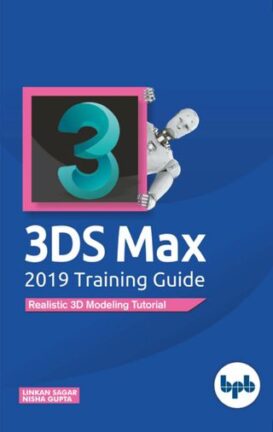
3DS Max 2019 Training Guide
Let Your Creativity travel without moving your feet
Key Features
● Step by step explanation.
● Tutorial book using real world example.
● Easy to Learn and simple to understand.
Description
Book is short, lively and based on practical platforms. Everything has been given step by step by using real-world and imagined examples. It takes the reader through the content design process explaining everything along the way.
Welcome to the world of Autodesk 3ds Max, a 3D modeling, animation, and rendering software package developed by Autodesk Inc. It is widely used by architects, game developers, design visualization specialists, and visual effects artists. A wide range of modeling and texturing tools make it an ideal platform for 3D modelers and animators. The intuitive user interface and workflow tools of Autodesk 3ds Max have made the job of design visualization specialists easier.
Autodesk 3ds Max 2019 Training guide is a tutorial-based textbook that introduces the readers to the basic features of 3ds Max 2019 created on real world model through tutorials. The textbook caters to the needs of both the novice and the advanced users of the software.
This textbook will help you unleash your creativity and help you create simple and complete 3D models and animations. The textbook will help the learners transform their imagination into reality with ease.
What will you learn
● 3Ds max, its graphical user interface.
● Standard, extended primitives.
● Spline, Nurb curves, object space modifiers.
● Basic and Advance modelling tools.
Who this book is for
3D designer, 3D modular and Interior designer
Table of Contents
1. Introduction & Overview
2. Create-Geometry
3. Create-Shape and Basic Tool
4. Modify-Object Space Modifiers
5. Basic Tools
6. Advance Modeling Tools
About the Author
Linkan Sagar has done B.Tech from UPTU, Lucknow. His book AutoCAD Training Guide was much appreciated and opted in the AutoCAD technology. He has extensively worked on various other software’s like Solidworks, Catia, Staad-pro and Revit. He is having wide Industry exposure. He has worked on and successfully delivered more than 18 major and over 100 mini live projects. He is currently associated with one of US Based MNC Company.
His Linkedin profile:
linkedin.com/in/linkan-sagar-4b16a7a7
Nisha Gupta is pursuing B.Sc from Delhi. She is having wide Industry exposure, worked on and successfully delivered many live projects.
Let Your Creativity travel without moving your feet
Key Features
● Step by step explanation.
● Tutorial book using real world example.
● Easy to Learn and simple to understand.
Description
Book is short, lively and based on practical platforms. Everything has been given step by step by using real-world and imagined examples. It takes the reader through the content design process explaining everything along the way.
Welcome to the world of Autodesk 3ds Max, a 3D modeling, animation, and rendering software package developed by Autodesk Inc. It is widely used by architects, game developers, design visualization specialists, and visual effects artists. A wide range of modeling and texturing tools make it an ideal platform for 3D modelers and animators. The intuitive user interface and workflow tools of Autodesk 3ds Max have made the job of design visualization specialists easier.
Autodesk 3ds Max 2019 Training guide is a tutorial-based textbook that introduces the readers to the basic features of 3ds Max 2019 created on real world model through tutorials. The textbook caters to the needs of both the novice and the advanced users of the software.
This textbook will help you unleash your creativity and help you create simple and complete 3D models and animations. The textbook will help the learners transform their imagination into reality with ease.
What will you learn
● 3Ds max, its graphical user interface.
● Standard, extended primitives.
● Spline, Nurb curves, object space modifiers.
● Basic and Advance modelling tools.
Who this book is for
3D designer, 3D modular and Interior designer
Table of Contents
1. Introduction & Overview
2. Create-Geometry
3. Create-Shape and Basic Tool
4. Modify-Object Space Modifiers
5. Basic Tools
6. Advance Modeling Tools
About the Author
Linkan Sagar has done B.Tech from UPTU, Lucknow. His book AutoCAD Training Guide was much appreciated and opted in the AutoCAD technology. He has extensively worked on various other software’s like Solidworks, Catia, Staad-pro and Revit. He is having wide Industry exposure. He has worked on and successfully delivered more than 18 major and over 100 mini live projects. He is currently associated with one of US Based MNC Company.
His Linkedin profile:
linkedin.com/in/linkan-sagar-4b16a7a7
Nisha Gupta is pursuing B.Sc from Delhi. She is having wide Industry exposure, worked on and successfully delivered many live projects.
Let Your Creativity travel without moving your feet
Key Features
● Step by step explanation.
● Tutorial book using real world example.
● Easy to Learn and simple to understand.
Description
Book is short, lively and based on practical platforms. Everything has been given step by step by using real-world and imagined examples. It takes the reader through the content design process explaining everything along the way.
Welcome to the world of Autodesk 3ds Max, a 3D modeling, animation, and rendering software package developed by Autodesk Inc. It is widely used by architects, game developers, design visualization specialists, and visual effects artists. A wide range of modeling and texturing tools make it an ideal platform for 3D modelers and animators. The intuitive user interface and workflow tools of Autodesk 3ds Max have made the job of design visualization specialists easier.
Autodesk 3ds Max 2019 Training guide is a tutorial-based textbook that introduces the readers to the basic features of 3ds Max 2019 created on real world model through tutorials. The textbook caters to the needs of both the novice and the advanced users of the software.
This textbook will help you unleash your creativity and help you create simple and complete 3D models and animations. The textbook will help the learners transform their imagination into reality with ease.
What will you learn
● 3Ds max, its graphical user interface.
● Standard, extended primitives.
● Spline, Nurb curves, object space modifiers.
● Basic and Advance modelling tools.
Who this book is for
3D designer, 3D modular and Interior designer
Table of Contents
1. Introduction & Overview
2. Create-Geometry
3. Create-Shape and Basic Tool
4. Modify-Object Space Modifiers
5. Basic Tools
6. Advance Modeling Tools
About the Author
Linkan Sagar has done B.Tech from UPTU, Lucknow. His book AutoCAD Training Guide was much appreciated and opted in the AutoCAD technology. He has extensively worked on various other software’s like Solidworks, Catia, Staad-pro and Revit. He is having wide Industry exposure. He has worked on and successfully delivered more than 18 major and over 100 mini live projects. He is currently associated with one of US Based MNC Company.
His Linkedin profile:
linkedin.com/in/linkan-sagar-4b16a7a7
Nisha Gupta is pursuing B.Sc from Delhi. She is having wide Industry exposure, worked on and successfully delivered many live projects.
Let Your Creativity travel without moving your feet
Key Features
● Step by step explanation.
● Tutorial book using real world example.
● Easy to Learn and simple to understand.
Description
Book is short, lively and based on practical platforms. Everything has been given step by step by using real-world and imagined examples. It takes the reader through the content design process explaining everything along the way.
Welcome to the world of Autodesk 3ds Max, a 3D modeling, animation, and rendering software package developed by Autodesk Inc. It is widely used by architects, game developers, design visualization specialists, and visual effects artists. A wide range of modeling and texturing tools make it an ideal platform for 3D modelers and animators. The intuitive user interface and workflow tools of Autodesk 3ds Max have made the job of design visualization specialists easier.
Autodesk 3ds Max 2019 Training guide is a tutorial-based textbook that introduces the readers to the basic features of 3ds Max 2019 created on real world model through tutorials. The textbook caters to the needs of both the novice and the advanced users of the software.
This textbook will help you unleash your creativity and help you create simple and complete 3D models and animations. The textbook will help the learners transform their imagination into reality with ease.
What will you learn
● 3Ds max, its graphical user interface.
● Standard, extended primitives.
● Spline, Nurb curves, object space modifiers.
● Basic and Advance modelling tools.
Who this book is for
3D designer, 3D modular and Interior designer
Table of Contents
1. Introduction & Overview
2. Create-Geometry
3. Create-Shape and Basic Tool
4. Modify-Object Space Modifiers
5. Basic Tools
6. Advance Modeling Tools
About the Author
Linkan Sagar has done B.Tech from UPTU, Lucknow. His book AutoCAD Training Guide was much appreciated and opted in the AutoCAD technology. He has extensively worked on various other software’s like Solidworks, Catia, Staad-pro and Revit. He is having wide Industry exposure. He has worked on and successfully delivered more than 18 major and over 100 mini live projects. He is currently associated with one of US Based MNC Company.
His Linkedin profile:
linkedin.com/in/linkan-sagar-4b16a7a7
Nisha Gupta is pursuing B.Sc from Delhi. She is having wide Industry exposure, worked on and successfully delivered many live projects.
Let Your Creativity travel without moving your feet
Key Features
● Step by step explanation.
● Tutorial book using real world example.
● Easy to Learn and simple to understand.
Description
Book is short, lively and based on practical platforms. Everything has been given step by step by using real-world and imagined examples. It takes the reader through the content design process explaining everything along the way.
Welcome to the world of Autodesk 3ds Max, a 3D modeling, animation, and rendering software package developed by Autodesk Inc. It is widely used by architects, game developers, design visualization specialists, and visual effects artists. A wide range of modeling and texturing tools make it an ideal platform for 3D modelers and animators. The intuitive user interface and workflow tools of Autodesk 3ds Max have made the job of design visualization specialists easier.
Autodesk 3ds Max 2019 Training guide is a tutorial-based textbook that introduces the readers to the basic features of 3ds Max 2019 created on real world model through tutorials. The textbook caters to the needs of both the novice and the advanced users of the software.
This textbook will help you unleash your creativity and help you create simple and complete 3D models and animations. The textbook will help the learners transform their imagination into reality with ease.
What will you learn
● 3Ds max, its graphical user interface.
● Standard, extended primitives.
● Spline, Nurb curves, object space modifiers.
● Basic and Advance modelling tools.
Who this book is for
3D designer, 3D modular and Interior designer
Table of Contents
1. Introduction & Overview
2. Create-Geometry
3. Create-Shape and Basic Tool
4. Modify-Object Space Modifiers
5. Basic Tools
6. Advance Modeling Tools
About the Author
Linkan Sagar has done B.Tech from UPTU, Lucknow. His book AutoCAD Training Guide was much appreciated and opted in the AutoCAD technology. He has extensively worked on various other software’s like Solidworks, Catia, Staad-pro and Revit. He is having wide Industry exposure. He has worked on and successfully delivered more than 18 major and over 100 mini live projects. He is currently associated with one of US Based MNC Company.
His Linkedin profile:
linkedin.com/in/linkan-sagar-4b16a7a7
Nisha Gupta is pursuing B.Sc from Delhi. She is having wide Industry exposure, worked on and successfully delivered many live projects.

5000 Inspiring Quotations
A Modern Approach to pass various competitive exams based on the current syllabus and helpful to excel in 5000 Inspiring Quotations exams and perform best in their career and comes with detailed solutions, not just the answer key, for each and every question included in it. It promotes self-evaluation by enabling you to not only practice and revise concepts but also keep track of your progress. This book allows you to clarify your doubts and remove the fears generally associated with exams, improve your concentration and hone your time management skills, enabling you to answer the questions within the given time frame.

71 Electrical & Electronic Projects
“This book is ideal for high school & engineering students as well as hobbyists who have just started out building projects in Electrical and Electronics fields. The book starts with electrical and electronics fundamentals necessary for execution of projects. The basic knowledge is introduced first followed by a schematic diagram, components list and the theory behind the project to be performed is given. The projects have been divided into three segments corresponding to beginners, intermediate and engineering levels. The materials required to build the projects are commonly available at the corner shop and are less expensive than you think.
Features
Ideal for beginners, high school (intermediate), engineering students and hobbyists
Useful for knowing basics of electronic components, circuit, and home lab setup.
Practical for doing projects at home or school laboratory #v&spublishers”

71 Famous Scientists
“The book, 71 Famous Scientists is an addition to the exclusive ‘71 Series’, which includes a number of books, such as 71 Science Experiments, 71+10 New Science Projects, 71 + 10 New Science Projects Junior, 71+10 New Science Activities, 71+10 Magic Tricks for Children, etc. published by V&S Publishers and widely appreciated by our esteemed readers.
It contains 71 world-renowned Scientists from across the globe, their brief life histories, contributions to the Scientific World including the books, journals and magazines that they have published, Awards and Honours received by them and any significant happenings that have changed the course of our lives. The book includes prominent names like, Albert Einstein, Alessandro Volta, Alexander Fleming, Alexander Graham Bell, Alfred Nobel, Avogadro, Anders Celsius, Andre Marie Ampere, Antonie van Leeuwenhoek and many such notable personalities.
The book has been written especially for the school students of the age group, 10-18 years, but can be read by readers of all ages, who love Science and its amazing and fascinating World of outstanding Inventions and Discoveries that have transformed the human society and our existence!
So Dear Readers, grab the book at the earliest for it will educate and interest one and all! #v&spublishers”
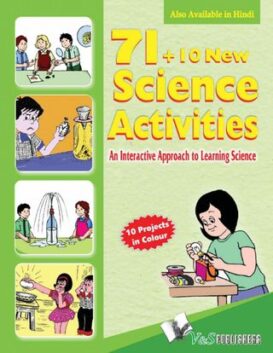
71+10 New Science Activities
In this book, 71+10 New Science Activities, the author has taken up the simple facts and principles of Science, such as: Air Force, Pressure, Weight, Emulsification, Osmosis, Gravity and Motion, Rotation, Types of Energy, Vibrations, Good and Bad Conductors of Electricity, Experiments with Magnets, Light and Sound for children, and projected them in a very simple and lucid language for the readers– particularly the school kids who can easily perform these activities at home or school , of course with the help and able guidance of their parents, elders or teachers. The book is meant for children of all age groups, particularly from 6 to 13, who can perform and experience the thrill of these fun-filled experiments as well as learn the basic principles of Science easily and quickly. #v&spublishers
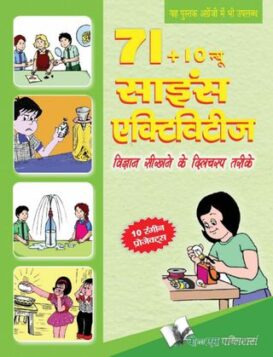
71+10 New Science Activities (Hindi)
“Science, as we all know refers to a body of knowledge itself, of the type that can be rationally explained and reliably applied. Science is a unique combination of Theory and Practice. A thorough knowledge of this subject is almost impossible without proper practical demonstrations which are also termed as Scientific Activities or Projects.
In this book, 71+10 Science Activities, the author has taken up the simple facts and principles of Science, such as: Air Force, Pressure, Weight, Emulsification, Osmosis, Gravity and Motion, Rotation, Types of Energy, Vibrations, Good and Bad Conductors of Electricity, Experiments with Magnets, Light and Sound for children, and projected them in a very simple and lucid language for the readers– particularly the school kids who can easily perform these activities at home or school , of course with the help and able guidance of their parents, elders or teachers.
The book is meant for children of all age groups, particularly from 6 to 13, who can perform and experience the thrill of these fun-filled experiments as well as learn the basic principles of Science easily and quickly.
Therefore, this book is a must read for all school kids, especially those from classes, five to nine to learn as well enjoy conducting all the 81 Fascinating Activities listed in the book, each explaining or proving some scientific theory or law.
So go ahead children, enjoy reading, learning and experimenting!
#v&spublishers”

71+10 New Science Project Junior
“Science, as we all know refers to a body of knowledge itself, of the type that can be rationally explained and reliably applied. Science is a unique combination of Theory and Practice. A thorough knowledge of this subject is almost impossible without proper practical demonstrations which are also termed as Scientific Experiments or Projects.
In this book, 71+10 New Science Projects (Junior), the author has taken up the simple facts and principles of Science, such as: Air Pressure, Volume and Density, Gravitational Force of the Earth, Surface Area of Solids, Fun experiments with Matchsticks, Water, Glass Bottle, Dishwashing Liquid, Oil, Candle, Balloon, etc., which are easily available for children and projected them in a simple and lucid language for the readers, particularly the school kids who can easily perform these experiments at home or school , of course with the help and guidance of their parents, elders or teachers.
The book is meant for children of all age groups, particularly from 6 to 13, who can perform and experience the thrill of these fun-filled experiments as well as learn the basic principles of Science easily and quickly.
Therefore, this book is a must read for all school kids, especially those from classes, five to nine to learn as well enjoy conducting all the 81 Fascinating Projects listed in the book, each explaining or proving some scientific theory or law.
So go ahead children, enjoy reading, learning and experimenting!
#v&spublishers”